
Dr Nina Garsoian - Professor, Historian and Writer
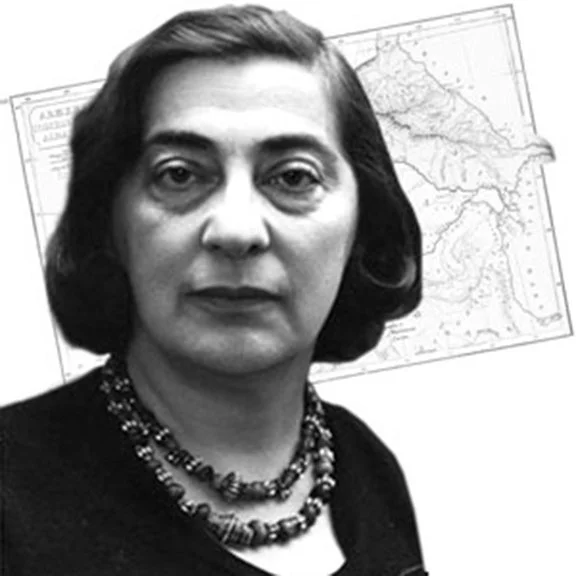
In 1923, a child was born in Paris to Armenian parents who had barely escaped genocide — a beginning marked by survival that would shape a lifetime of preserving the very culture others had tried to destroy. Dr. Nina Garsoian traded a promising career as a classical pianist for something she found even more compelling: unearthing the centuries-deep roots of Armenian civilization. Over the next seven decades, she would become one of the world's foremost authorities on Armenian and Byzantine history, build a groundbreaking Armenian Studies program at Columbia University, and produce scholarship that fundamentally reshaped how historians understand the intersection of Armenian, Persian, and Byzantine worlds. Her story is one of resilience, intellectual passion, and an unwavering commitment to ensuring that Armenian history — and the irreplaceable knowledge preserved only in the Armenian language — would never be lost again.
Early Life and Education
Nina was born in Paris, France in 1923 to parents who had escaped from the deadly Armenian Genocide perpetrated by the “Young Turk” government which had removed the leaders of the Ottoman Empire. Nina and her mother moved to New York City in 1933 where she began to pursue a musical career as a classical pianist while she was an undergraduate at Bryn Mawr, a private women’s liberal arts college in Pennsylvania. It was one of the first women’s colleges in the United States to offer graduate education through a PhD. She studied with Nadia Boulanger and Robert Casadesus, both who were well-known concert pianists, teachers and composers.
At Bryn Mawr Nina majored in classical archeology and ancient history and graduated in an accelerated three-year program in 1943. She gave up her musical career to pursue her interests in archeology and history and proceeded to get her doctorate in 1958 at Columbia University eventually joining the faculty there in 1962.
Teaching
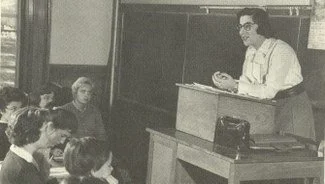
Nina Garsoïan teaching at Smith College, 1958. From her memoir De Vita Sua (Small Collection DS174.92.G37 2011)
Nina came to Columbia University’s Department of Near Eastern Languages and Literature to teach Armenian Studies; specifically Armenian History as a part-time visiting professor while continuing full time at Smith College, where she had started teaching in 1956 while finishing her doctoral dissertation for Columbia. She commuted weekly from Northampton, Mass to Manhattan for three years. After that she returned to her alma mater as the full-time associate professor of a newly revitalized Armenian curriculum.
The Armenian Studies program at Columbia was inaugurated in 1962 on a parttime basis and established as a regular program in 1965 with a grant from the National Association of Armenian Studies and Research and further support from the AGBU (Armenian General Benevolent Union). Originally focused on teaching modern Armenian with additional studies in Armenian civilization the program has expanded to include art history, archeology, sociology, political science, and ethnomusicology.
During the celebration of the creation of the Centennial Professorship at Columbia University in 1979 Dr Garsoian announced there would be more extensive undergraduate courses, such as the introduction of the Armenian tradition and its accomplishments to the non-Armenian community, the addition of Armenian components to other disciplines, and the training of teachers for the Armenian schools in the United States. Textbooks, seminars, a room for an Armenian students’ club and exhibits were also part of the plans.
A few months later during a talk show at the Armenian Cathedral auditorium Dr. Garsoian was asked why non-Armenians are interested in our literature. She explained that ‘enormous amounts of material’ are available only in Armenian translations because the originals were lost.
“For example, Iranian history around the time of Christ. And Armenian is a fascinating language for philologists who deal with the structure, historical development and relationships of a language.”
Armine Dikijian – Armenian Mirror Spectator 12-5-79
Contributions to Armenian Studies
Dr. Garsoian was an expert in Byzantine and Armenian studies. She traveled extensively throughout Russia and Armenia. She had an impressive academic and educational background which spread from Europe to Africa, to the Middle East and the United States. She felt the continuation and existence of Armenian Culture was due to the isolated geographical settings of Armenia. The Armenian kings took refuge in the mountains and were left untouched by their enemies. It is through such closely knit large control over the lands and regions that Armenian Culture survived throughout the centuries.
“Armenia assimilated for its survival and became an active society rather than a passive one.” Armine Dikijian, Armenian Mirror Spectator.
Notable Works
Professor Garsoian published many books and encyclopedic articles on Armenian, Byzantine and Sasanian history. In her publications she emphasized the Iranian/Persian influence on Armenian History. Her first book, published in 1968, “The Paulican Heresy” is a study of the origin and development of Paulicanism in Armenia and the eastern provinces of the Byzantine Empire.
Paulicianism was a Christian sect which originated in Armenia in the 7th Century. Followers were called “Paulicians” and referred to themselves as “Good Christians” or “True Believers” and referred to orthodox Christians as Romanists. The name Paulician literally means “followers of Paul the Apostle.” The identity of Paul is disputed. The sect flourished from 650-872.
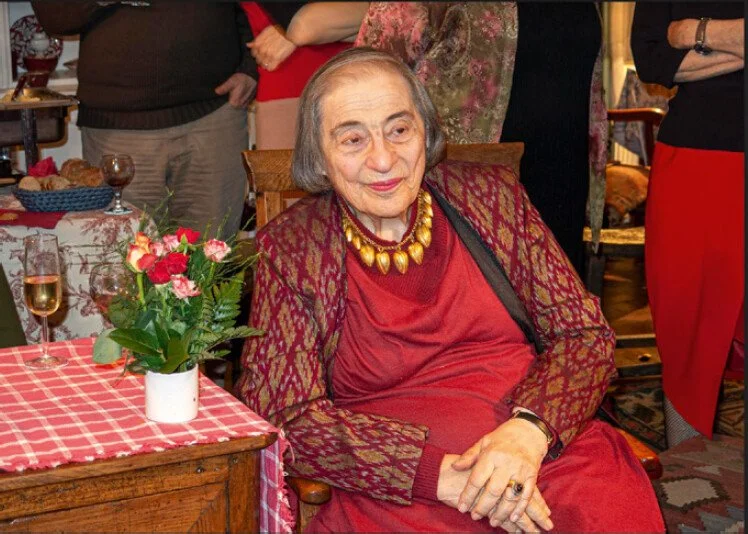
Citation: Journal of the Society for Armenian Studies 29, 2 (2024) ; 10.1163/26670038-12342799
Her second book “Armenia between Byzantium and the Sasanians” published in 1985 is about the Sasanian Empire which flourished between 224 – 651 AD. It was the last pre-Islamic Persian Empire, a powerful Iranian dynasty that ruled from modern-day Iran, Iraq and beyond, rivaling Rome/Byzantium as a world power. It profoundly influenced later Islamic civilization and world history, and preserved learning during Europe’s Dark Ages.
She published four more books in the 1990’s which included her autobiography “De Vita Sua” which followed a book about “Studies on the formation of Christian Armenia”. There were many articles and translations throughout her career. One that caught my eye was “The Trade and Cities of Armenia in Relation to Ancient World Trade” by Hakob Manandian published in 1965.
Honors and Rewards
Dr. Nina Garsoian received numerous awards and honors for her scholarship and dedication to Armenian Studies, including the Movses Khorenatsi Medal, which is one of Armenia’s highest cultural awards.
Legacy
Nina Garsoian’s work continues to be influential in the field of Armenian Studies. Her dedication to the study of Armenian history and her scholarly achievements have made her
a respected figure in both Armenian and academic communtiies. Her work remains an important resource for those interested in understanding the rich history and culture of Armenia. Dr. Garsoian passed away in 2022 at the age of 99.